Monday, January 21, 2008

Sunday, January 20, 2008
Kiyomizu-dera
Otowa-san Kiyomizu-dera (音羽山 清水寺) in Eastern Kyoto is one of the best known sights of the city. The temple dates back to 798, but the present buildings were constructed in 1633.
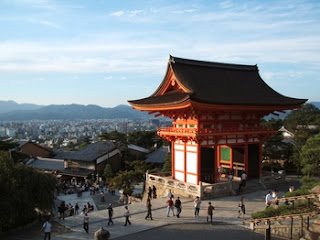
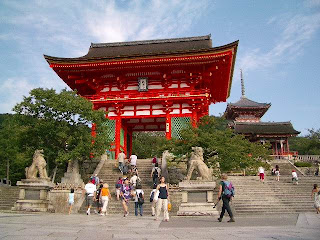


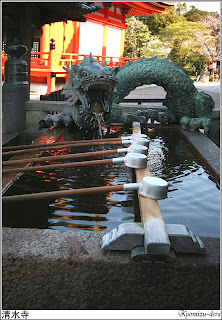
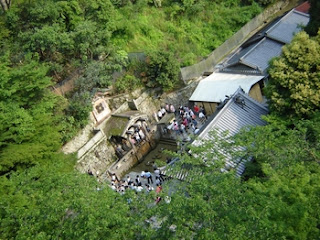
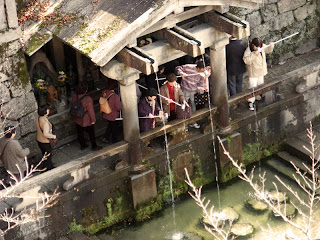
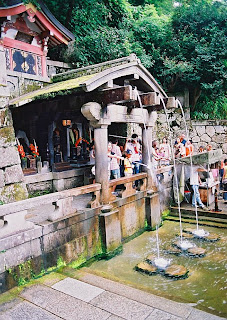
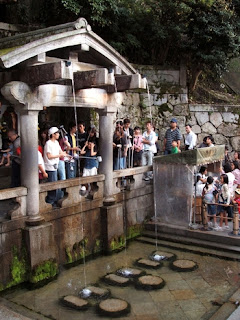
The temple takes its name from the waterfall within the complex, which runs off the nearby hills. Kiyomizu (清水) literally means pure water, clear water or limpid water is notable for its vast veranda, supported by hundreds of pillars, that juts out over the hillside and offers impressive views of the city.
Kiyomizu commands an exalted spot on a steep hill in eastern Kyoto. The quaint street leading up to the temple is lined with souvenir shops, restaurants and ryokan (Japanese-style inns).
The main hall of Kiyomizudera is notable for its vast veranda, supported by hundreds of wooden pillars, which juts out over the hillside and offers beautiful views of the city.
Beneath the main hall is the waterfall Otowa-no-taki, where three channels of water drop into a pond. Visitors to the temple collect the water, which is believed to have therapeutic properties, from the waterfall in metal cups or commemorative plastic cups. It is said that drinking the water of the three streams confers health, longevity, and success in studies.
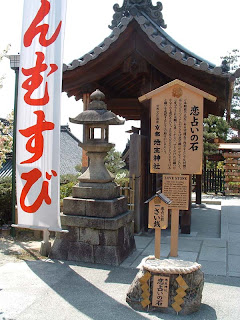
The temple complex contains several other shrines, notably Jishu-jinja, dedicated to Okuninushino-Mikoto, a god of love and "good matches". Jishu-jinja possesses a pair of "love stones" placed 18 metres apart, which lonely visitors attempt to walk between with their eyes closed. Success in reaching the other stone, eyes closed, is taken as a presage that the pilgrim will find love. One can be assisted in the crossing, but this is taken to mean that an intermediary will be needed. The person's romantic interest can assist them as well.
The complex also includes all the fixtures of a popular temple, being one of the most-visited attractions of the city: hawkers offering various talismans, incense, and o-mikuji (paper fortunes ranging from "great fortune" to "great ill") abound. The site is particularly popular during festivals (especially New Year's and o-bon in the summer) when additional booths fill the grounds selling traditional holiday foodstuffs, among other things, and the crowds are immense.
The temple is also a particular haven for students wishing the aid of deities in graduation, and is well known for having trees (and backdrops, etc.) covered with paper wishes tied there by the hopeful.
The popular expression "to jump off the stage at Kiyomizu" (「清水の舞台から飛び降りる」) is the Japanese equivalent of the English expression "to take the plunge". This refers to an Edo period tradition that held that, if one were to survive jumping from the stage, one's wish would be granted.
Saturday, January 19, 2008


Thursday, January 17, 2008
Fushimi Inari Taisha
Fushimi Inari Taisha (伏見稲荷大社) is the head shrine of Inari, located in Fushimi-ku, Kyoto. It is a Shinto shrine dedicated to Inari, the god of rice, sake, and prosperity. "Fushimi" is simply the location, added to the name to distinguish it from other Inari shrines. The shrine sits at the base of a mountain also named Inari, and includes trails up the mountain to many smaller shrines.
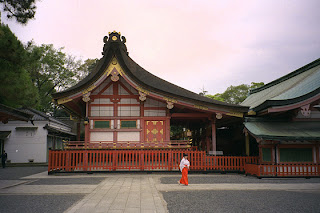
One of Kyoto's oldest (founded in 711 AD) and most revered Shinto shrines, Fushimi Inari serves as the headquarters for all the 40,000 shrines dedicated to Inari across Japan.
Originally the god of rice, Inari now governs the modern equivalent: success and prosperity in business. Fushimi Inari Shrine draws thousands of businessmen and tradespeople seeking blessings for their enterprises, especially at the first prayers of the New Year. 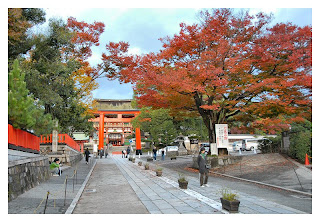
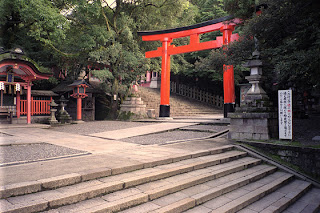
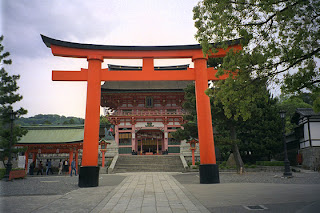


One of Kyoto's oldest (founded in 711 AD) and most revered Shinto shrines, Fushimi Inari serves as the headquarters for all the 40,000 shrines dedicated to Inari across Japan.
Originally the god of rice, Inari now governs the modern equivalent: success and prosperity in business. Fushimi Inari Shrine draws thousands of businessmen and tradespeople seeking blessings for their enterprises, especially at the first prayers of the New Year.
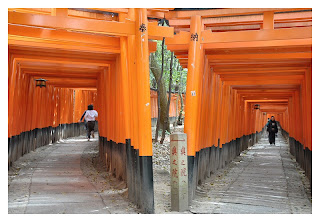
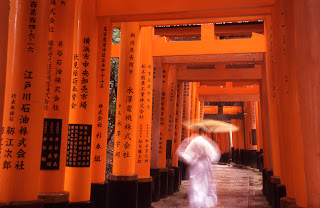
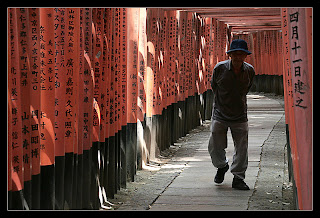
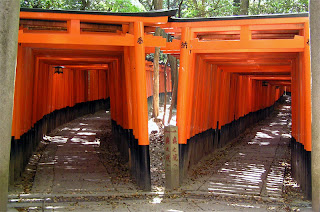
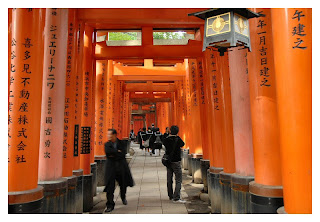
Fushimi Inari is noted for its remarkable sight of some 10,000 small torii (shrine gates) that arch over a long path up the hill behind the shrine. It takes about two hours to walk along the whole trail, and there are nice views of Kyoto from the top. Donated and inscribed by businesses and individuals thankful for their prosperity, the long tunnel of torii is one of the most iconic visions of Kyoto.
Along the hiking trail, small restaurants serve Kitsune Udon ("Fox Udon"), a noodle soup topped with pieces of aburaage (fried tofu), a treat favored by foxes. You can also try Inari sushi, which is fried tofu wrapped around sweetened rice (One of my favorite things to eat!).
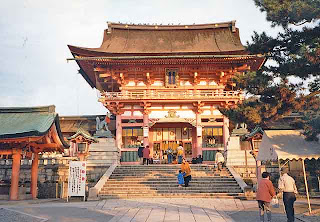
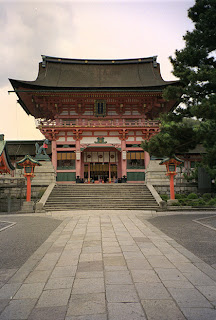
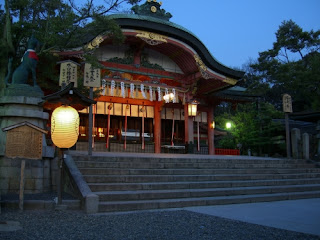
At the bottom of the hill are the rōmon (楼門, "main gate") and the Go-Honden (御本殿, "main shrine"). Behind them in the middle of the mountain, the Oku miya (奥宮, "inner shrine") is reachable by a path lined with thousands of torii. To the top of the mountain are tens of thousands of tsuka (塚, "mound") for private worship.
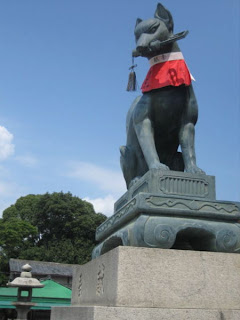
Kitsune holding a key in its mouth, at the main gate of the Fushimi Inari shrine.
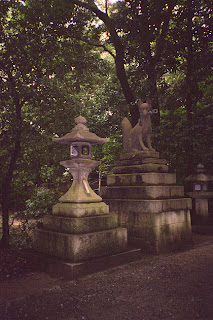
If possible, visit Furshimi Inari near dusk — you'll be much more likely to wander alone through the tunnels of torii in the quiet woods, which is a magical experience as daylight fades. Foxes are said to be the messengers of Inari, and stern bronze foxes (kitsune) can be seen throughout the shrine. Inari's foxes are generally considered helpful, but they have also been said to bewitch people.
Subscribe to:
Posts (Atom)